
Introduction
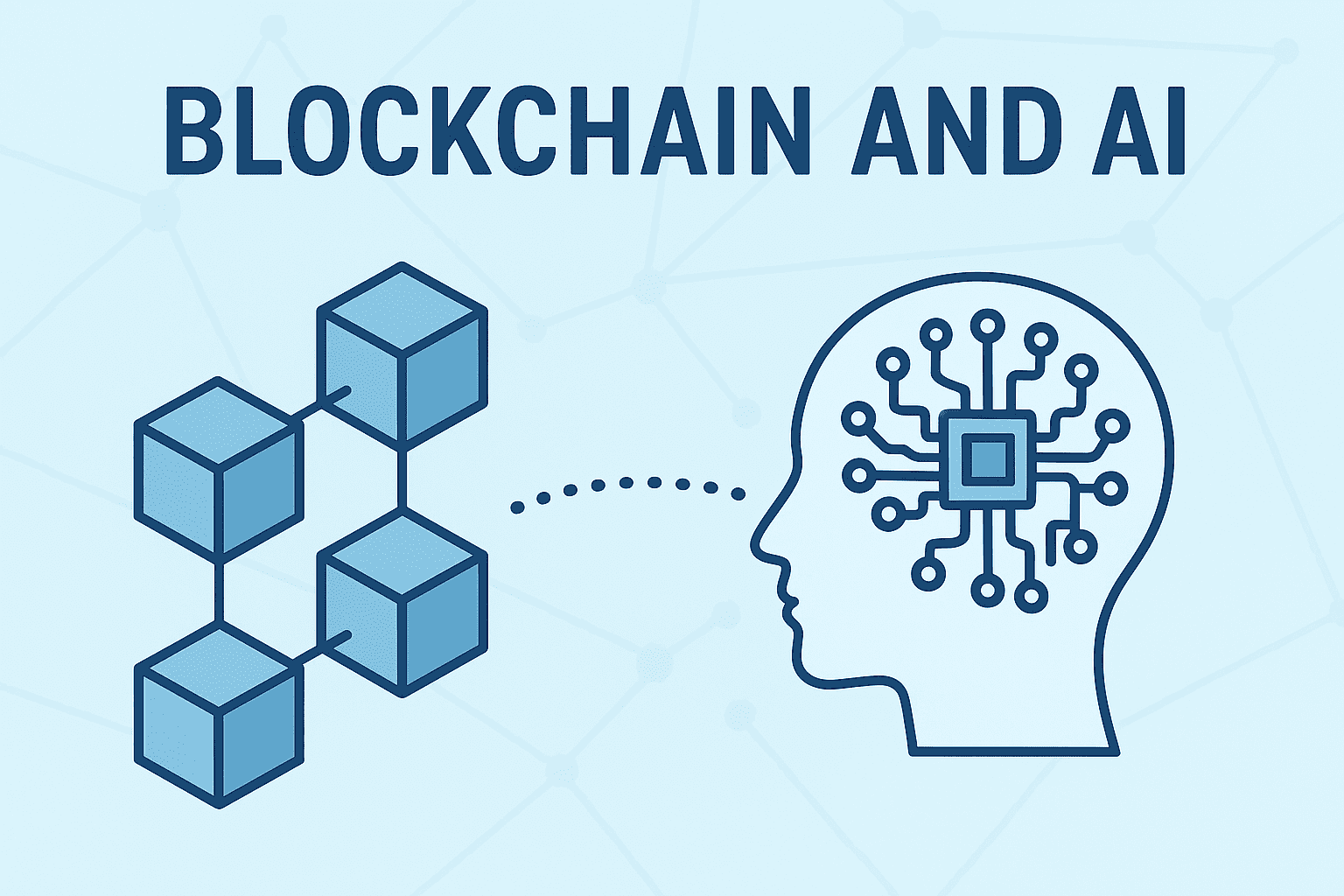
Just as agricultural revolution and industrial revolution upheaved human society and reshaped it for good, digital revolution is on the brink of incredibly remodeling day-to-day life. We are living in a time where after every few years, a new smart technology is born that changes how we think, live, shop, speak, communicate, etc. A few decades ago, mobile phones were most hankered-after, dreamt-of devices. Then, internet felt like an ethereal invention. The advent of blockchain technology and now its stellar fusion with AI is set to revamp our economic, academic and cultural life. Although blockchain and AI are blockbuster technologies, their interoperability is no less than an amazing alchemy.
What is AI?
In the simplest possible words, artificial intelligence is a group of methods that enable machines to do the things that hitherto required human judgement. It involves a network of computers that can learn from data on the internet. In reality, in pattern hunting from an unfathomable ocean of data, AI is far better than humans. As per a rough estimate, no less than $15 trillion will be added to global economy by AI alone by 2030.
Blockchain Technology
Blockchain is a decentralized record book (ledger) that anyone can open or read, but to add new record in which certain conditions are to be fulfilled. The world has hailed it for being better than traditional book keeping. For example, any bad actor can tamper with your banking record. You always need a third party to verify your transactions. Being private, the record is not transparent. In 2008, Satoshi Nakamoto published his iconic paper titled “Bitcoin: A Peer-to-Peer Electronic Cash System.” He clarified how blockchain works and how it is expected to make waves in future.
The Fusion of Two Game-Changing Technologies: Blockchain and AI
Blockchain and artificial intelligence are two responses to two radically different problems. Blockchain arrived as a tamper-evident distributed ledger to remove the need for any intermediary from between transacting or data sharing parties. AI is a set of algorithms to extract patterns from all the available data on the internet and make predictions or take actions on the basis of the extraction.
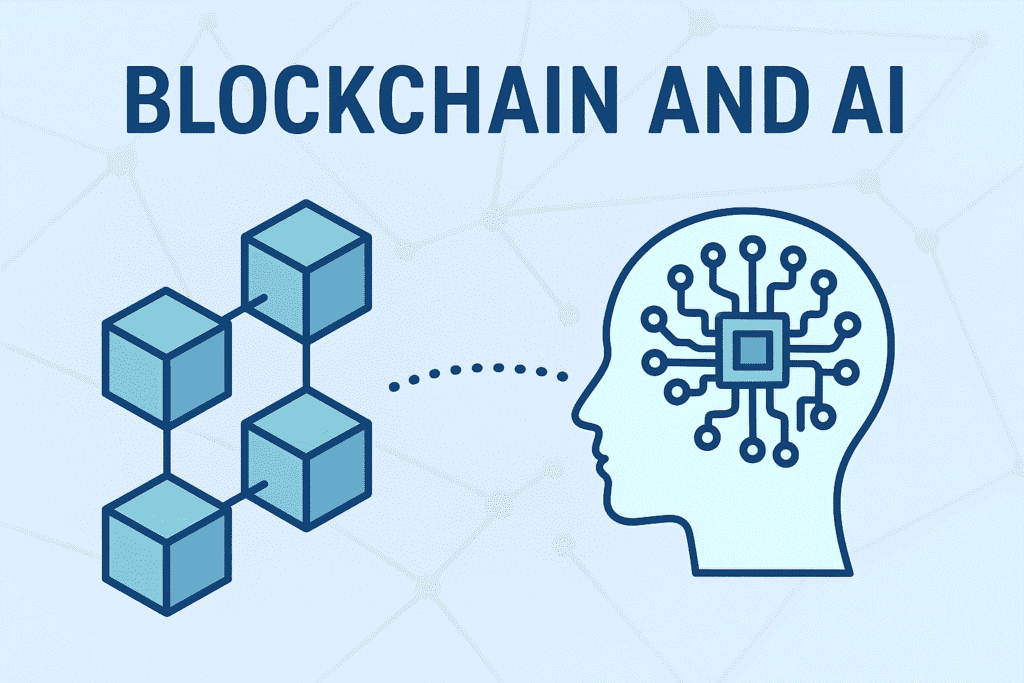
The first and foremost advantage of the fusion of the two is that blockchain can bring transparency and security in data science and finance. The same level of decentralization boasted by blockchain technology can be applied to AI. When artificial intelligence is not controlled by a central company, it becomes decentralized AI (DeAI) and become a part of decentralized systems.
AI brings intelligent automation, and adaptability to blockchain networks. Transaction processes can be optimized. AI can also predict and suggest ways to tackle network congestion. Moreover, it can be useful in making consensus mechanism in blockchains even better by incorporating blockchain AI learning. In short, blockchain brings trust layer, and AI provides thinking layer. The fusion of blockchain and AI also creates new horizons on Web3 ecosystem, which is the next generation of internet built on blockchain technology.
How AI Enhances Blockchain through Blockchain and AI Integration
As hinted earlier, AI can work wonders when it works in tandem with blockchain. Since AI can make predictions on the basis of collected data, it can foresee when network congestion might happen. Gas fees skyrocket during busy hours. If you rely on AI predications, you are able to save money in terms of gas fees.
AI can also improve intelligent consensus systems. Consensus means the method through which blockchain nodes agree on the state of data. AI-driven proof-of-stake models can learn from past behavior on the network and choose faster and smarter ways to reach agreement. This can reduce the energy requirement and improve performance through data transparency.
AI data security is a noteworthy enhancement to blockchain networks. Artificial intelligence can detect fraud patterns, suspicious actions, and hacking attempts. Therefore, we can say that AI plays useful role in cybersecurity. In certain cases, AI can even alert the system beforehand to save the damage. Also, AI can identify bugs in smart contracts and report them to the developers before the vulnerability becomes visible to attackers.
Real-World Use Cases
The incorporation of AI in blockchain is exhibited in a variety of fields today. Healthcare sector is a prime example. Patient data is very sensitive and valuable, but it is fragmented. This data is an essential prerequisite for training predictive models. Healthcare departments can store patients’ data on private blockchains. AI can help doctors organize the scattered data and also help them in diagnosing diseases.
Three factors necessitate the usage of AI and blockchain technology together in finance. Banks and insurance companies use artificial intelligence to study risks, detect frauds and predict market behavior. The usage of blockchain data by AI models makes the results more reliable. Moreover, the use of AI in DeFi helps run risk analysis on different blockchain networks. Several rug pulls have occurred due to loopholes in the very smart contracts of projects. AI can spot such traps and save investors’ money. Emerging Web3 startups such as SingularityNET, Fetch.ai, and Ocean Protocol are already experimenting with this fusion.
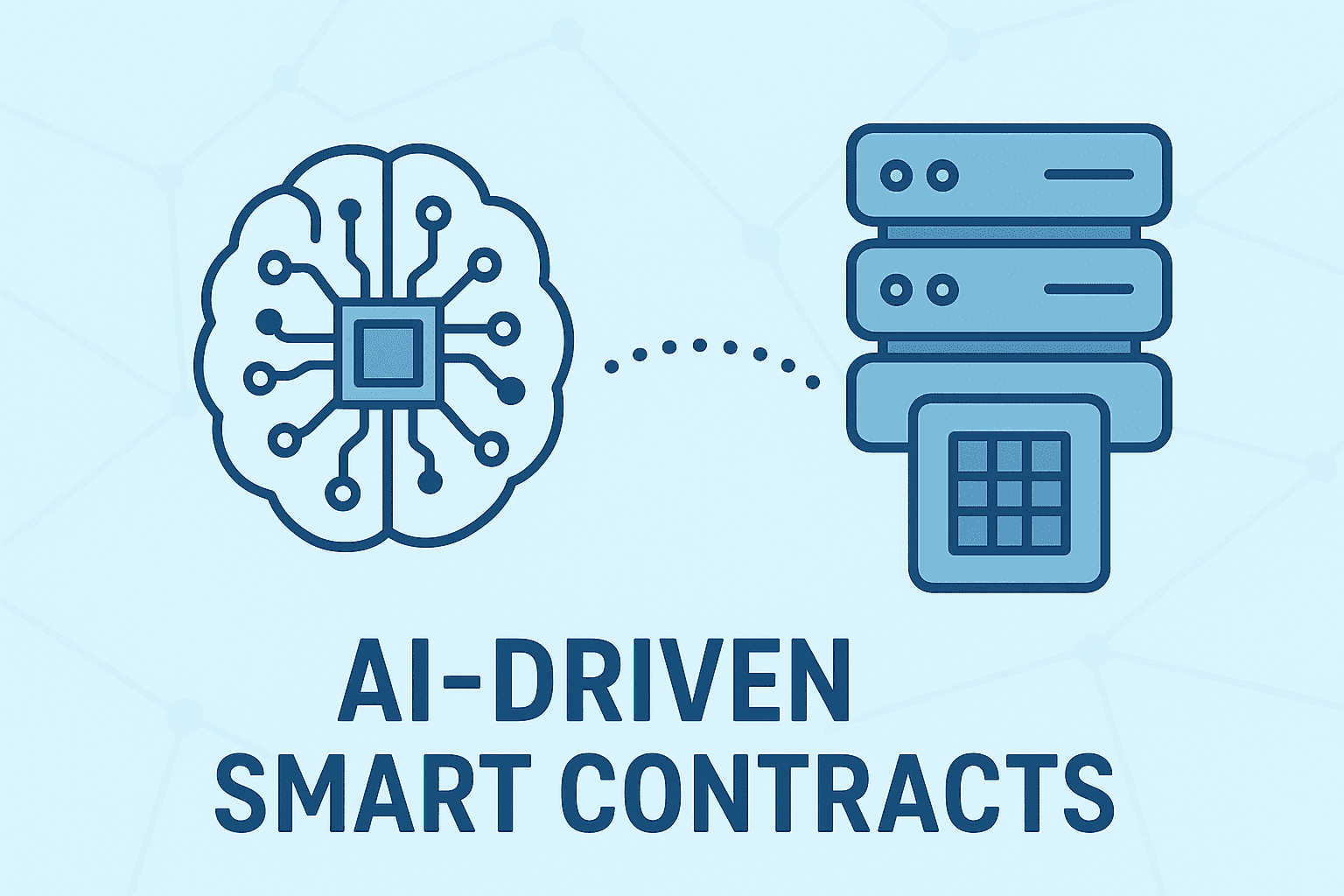
The product we use in daily life reach us through many hands. Labelled information is sometimes forged. When blockchain technology takes over the whole supply chain, it can make the journey of a product more transparent. The use of AI can help producers and suppliers know in real time where the product is needed and how much of it is to be distributed. Blockchain optimization improves supply chains.
Integration of AI and blockchain also builds honesty in climate actions. Many energy suppliers falsely claim that their supply is clean. Just as blockchain ensures transparency in supply chain of other products, if smart grids transfer their operations to a blockchain, the technology can verify whether the grid is receiving clean energy.
Challenges and Limitations
No matter how useful these two advancements are, there are still some concerns that need redressal. Blockchain scalability still face serious issues. If too many users us the network at once, it tends to get slow. As far as AI is concerned, its decentralization can be a problem. Who will correct its mistakes and who will take responsibility if it harms someone? Hence, blockchain scalability and AI ethics are the major concerns.
Another issue is the balance between transparency and data privacy and security. AI models need a massive amount of data to learn and generalize. Moreover, the systems running blockchains and AI models need a lot of energy. Yet another challenge is the local laws and regulations. Not every government likes decentralization. They would rather make everything more and more centralized.
Future of AI Blockchain Interoperability
Despite challenges, the direction of blockchain and AI is obvious, pointing toward a future defined by three major shifts. By 2030, AI-managed economies may see autonomous agents handling investments, lending, and risk assessment through blockchain-verified transactions. Such a situation will give an enormous advantage to those who adapt early. In a digital society, AI could predict transportation, healthcare, and energy needs while blockchain secures privacy and lets citizens own and monetize their data.
Meanwhile, decentralized knowledge networks could transform education as AI designs personalized learning paths that are backed by blockchain-verified credentials. These are not distant dreams but logical extensions of today’s accelerating technological trends.
How to Get Started
To get started with this new digital advancement, learners can explore online courses, GitHub communities, and open source blockchain AI tools that merge blockchain and AI concepts. Professionals can sharpen their expertise by experimenting with decentralized AI tools, while investors can study emerging platforms to understand how to invest in AI crypto safely. They main thing is to identify and plunge into web3 innovation early by evaluating token utility, real-world use, and long-term value. It is also essential to stay curious, keep learning, and engage with communities shaping this next digital revolution.
How do blockchain and AI work together?
Blockchain provides a secure, transparent ledger, while AI analyzes data and makes predictions. Together, they create smarter and more trustworthy digital systems.
What are the real-world uses of blockchain and AI integration?
AI-powered blockchain is used in healthcare, finance, supply chains, and Web3 projects to improve security, transparency, and decision-making.
What are the main challenges of combining blockchain and AI?
The biggest challenges include blockchain scalability, AI ethics, data privacy, and high energy requirements for running both technologies.

Umair Younas is a veteran crypto journalist with 6 years of experience. He writes on various categories including Bitcoin ($BTC), blockchain, Web3 and the broader decentralized finance (DeFi) space. He pens well-researched price analysis and prediction articles in addition to credible news articles. He writes easy-to-grasp educational articles to fulfil his aim of creating blockchain awareness.
- Umair Younas

- Umair Younas
- Umair Younas
- Umair Younas


If you find yourself fascinated about your color season, particularly if you think you might be a Deep Summer, comprehending the deep summer color palette can be a revolutionary approach for your wardrobe and hair color choices. Deep summer color analysis enables you to pinpoint which cool, understated tones enhance your skin most effectively, whether you have a amber undertone, dusky skin, or porcelain skin. There are countless free tools and quizzes online, including AI color analysis choices, that make understanding your seasonal color type easier than ever — check out yellow undertone skin clothes for a rapid, engaging color palette test.
Identifying your color season isn’t just about clothes; it can also steer your hair color choices for modern trends, from cool summer hair colors to features that work for deep summer types ideally. Seasonal color analysis improves with makeup too, securing everything coordinates magnificently with your inherent tones. If you’re hesitant whether you’re a Deep Summer or maybe a Light Spring or Dark Winter, investing some time with color analysis platforms or available quizzes can illuminate what colors genuinely make you glow.