Introduction
Like any innovation, blockchain technology and cryptocurrency are getting traction across the globe at an amazing rate. States have started adding Bitcoin into their treasuries. Leading financial institutions are going in heavily and retail investors are also gathering in the arena. Despite all this advancement, digital assets still lag far behind the fiat currency when it comes to buying and selling commodities and properties. For this purpose, you need to convert your crypto assets into fiat currency. Conversion of fiat into crypto, or crypto into fiat needs specialized services called on-ramps and off-ramps. This article brings practically useful information regarding these services.
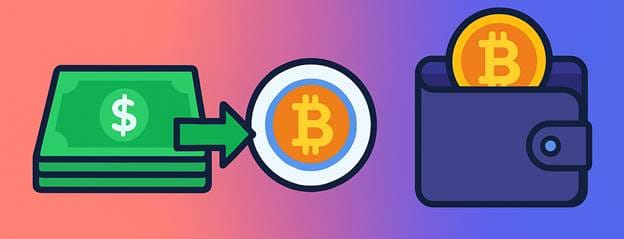
Crypto On-Ramps
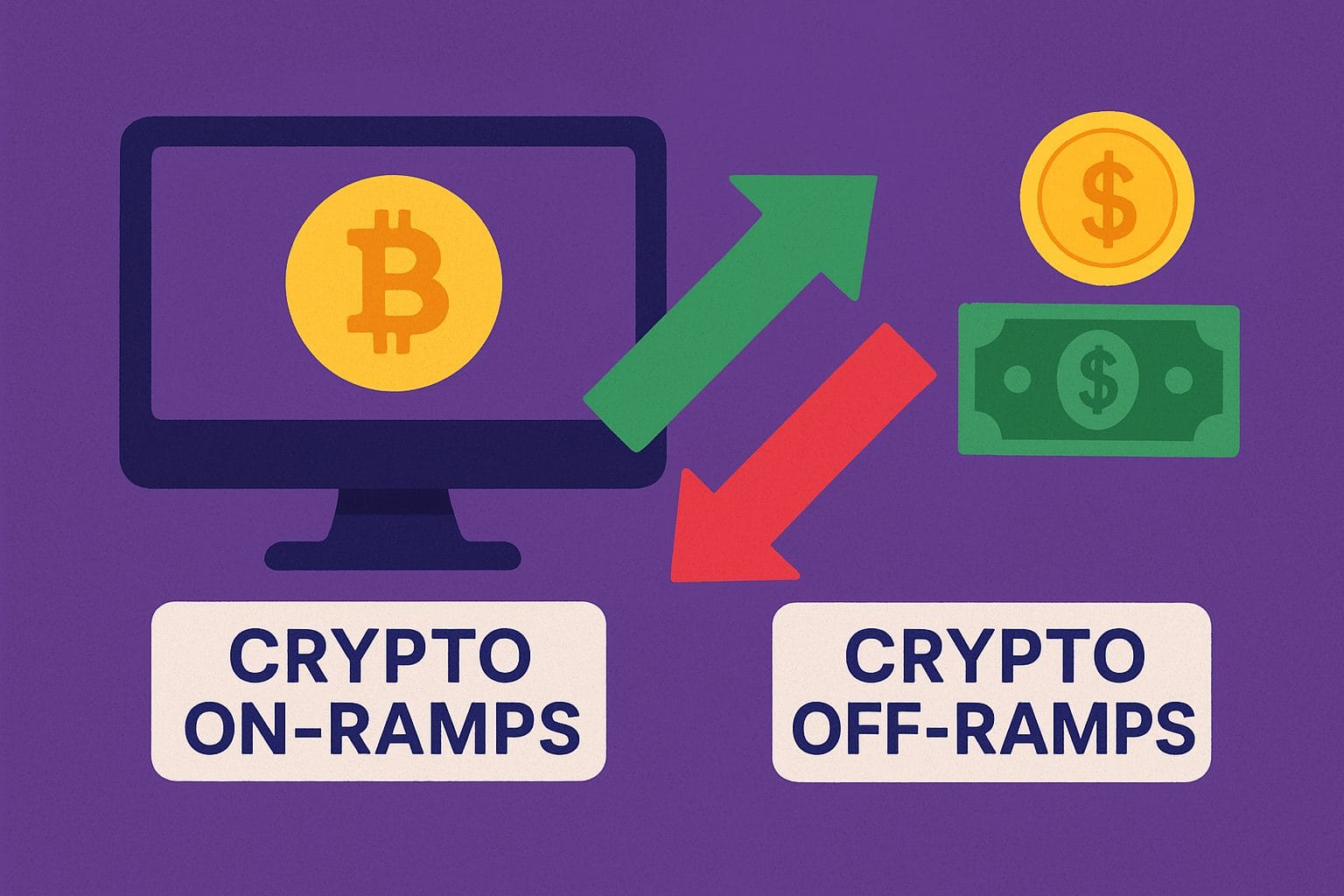
When you want fiat to crypto conversion, you use crypto on-ramps, which are services or systems that let you buy cryptocurrencies with USD, GBP, SAR, PKR, INR, or whatever currency you use in your country. You can regard these services as bridges between digital currencies and your bank accounts. In today’s world full of emerging technologies, there is a wide range of on-ramp services at your disposal.
Examples of On-Ramps
Availability of on-ramp services mainly depends on your geographic location. In many countries, crypto is not officially recognized by the government, so there are no regulated crypto on-ramps. In such cases, peer to peer (P2P) services are the only major option for converting fiat currency to cryptocurrency. Using P2P services, you can add fund to your wallet by paying fiat to the agents who post advertisements to sell different cryptocurrencies on centralized exchanges. You pay them from your account and buy crypto.
If you live at a place where there is no official restriction, there are more choices for you. Fintech apps such as PayPal or CashApp have built-in ways to buy crypto with debit card or from banking account directly. Web3 embedded on-ramps are specialist services that plug into websites and associated apps. This category includes Transak and Moonpay. Banxa and other providers build tools that businesses can embed so their users can buy and sell without leaving the app. Moreover, many centralized exchanges are now offering the purchase of crypto directly from their own apps.
Why On-Ramps Matter
These services are indispensable to the growth of crypto as they bring in new investors to the market. In the absence of appropriate on-ramps, adoption of digital currencies will halt. A person who wants to buy an NFT needs a smooth way to turn fiat into tokens. A gamer who needs a token for in game use needs the same simple path. There are merchants who accept crypto. They need a safe way to convert their digital currency assets into fiat currency. All this is made possible by on-ramps. Additionally, these services indirectly web3 user adoption where investors use it.
Crypto Off-Ramps
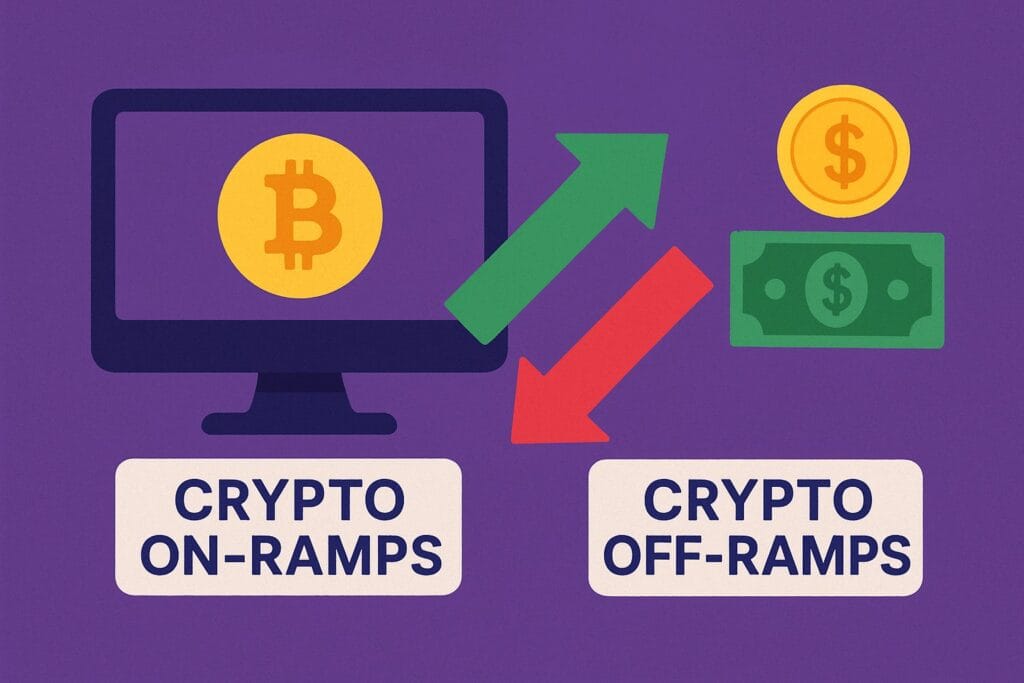
As on-ramps are your entry routes into crypto, off-ramps are the exit routes. Crypto off-ramps enable you to sell your crypto assets for local currency so that you can transfer them to your bank account or use the money in the real world. Crypto to fiat withdrawal is as important as the conversion from fiat to crypto in the first place because crypto assets are not accepted everywhere yet. If crypto adoption is to keep growing momentum, off-ramps should be as smooth as on-ramps.
Common Off-Ramp Methods
The story of off-ramps is not much different from that of on-ramps. P2P remains the only options for restricted regions to sell crypto and then convert USDT to bank accounts. At other places, exchanges themselves buy crypto and send fiat to the sellers’ accounts so that people can easily sell Bitcoin for cash. Many on-ramps also serve as off-ramps. MoonPay, Banxa, Transak, Ramp Network, Coinbase Pay, and Sardine are a few global crypto cashout services that let users both buy crypto with fiat and cash out crypto back to fiat.
Significance of Off-Ramps
Off-ramps are probably more important than on-ramps as you cannot spend cryptocurrency directly in most of the cases. Therefore, all your profits remain insignificant if not realized in the form of fiat currency by means of conversion or selling. A reliable off-ramp ensures that your earnings from trading, staking or NFTs can actually reach your bank account or a mobile wallet. Without it, even the most successful crypto gains are just numbers on the screen. Fast and low-fee off-ramps give you control over your money and make crypto practical for everyday use.
How On-Ramps and Off-Ramps Work: A Step-by-Step Guide
Identity Verification
Whether you want to sell crypto or buy it, you need to fulfill know-your-client (KYC) process. The aim is to obey the law dictated by Financial Action Task Force (FATF), which is a global body bent on making financial activities as transparent as possible. You need to provide your documents and sometimes selfie holding the documents.
Payment Processing
Payment processing depends on the type of service you are using. They also accept mobile wallets and payment apps in some places. A few accept Apple Pay and Google Pay. Furthermore, a few regions have the options of the cash agents where you can go physically and receive hard cash after transferring them you crypto funds.
Asset Conversion
When you have closed your trade, you want to convert the coins to $USDT or $USDC. Centralized exchanges have an order book that provides liquidity to the market. You’re your sell or buy orders match the corresponding order on the book, you order is automatically filled. Decentralized exchanges have liquidity pools instead of order books.
Fees and the Hidden Costs You Should Know About
It is obvious that when an investor is going to buy, they would like to cheapest way to buy crypto. Similarly, they would look for the most profitable means to sell when exiting the market. However, there are some fees and deductions that must be kept in mind. Some services charge a flat fee. Some use a percentage of the amount. Immense variety in fee structure makes it impossible to give any useful detail, but you must have a look at it before proceeding with buying and selling to choose suitable entry and then low-fee crypto withdrawals.
Security, Regulation, and Compliance
Modern on-ramps and off-ramps try their best to comply with KYC and AML laws and FATF travel rule. AML is the short form for anti-money laundering. They also integrate blockchain analytics integration (Chainalysis, TRM Labs). TRM labs is a blockchain intelligence company that develops a system to help organizations detect and investigate cryptocurrency fraud and financial crimes. Any company that processes, stores, or transmits card payments including crypto on-ramps that accept debit or credit cards must ensure compliance with PCI DSS payment security. The term refers to Payment Card Industry Data Security Standard.
Risks
Blockchain networks and cryptocurrencies market in general are full of fraudulent practices. The most vulnerable investors are the ones whose governments impose restrictions, so they have to trade illegally. P2P scams abound in such regions. Accounts of innocent investors are banned due to transacting with malicious accounts or due to chain disputes in which two immediate parties are not involved in any illegal activity but one of their previous transaction partners was involved in some criminal practice. Web3 sites and apps may also steal users’ funds, but it is a bit rare. It is always advisable to do extensive research on the company you are going to use for off-ramp or on-ramp business.
The Future of Crypto On-Ramps and Off-Ramps in 2026
With rising number of entities adopting digital currencies, we anticipate more and more banking apps incorporating buying and selling options for crypto tokens. The introduction of AI will make compliance faster and easier as it can spot fakes, mismatches, or edits much faster than a human team. It is also very good at fraud detection and continuous monitoring. CBDC (central bank’s digital currency) can settle transactions more swiftly and more smoothly than is being done at present.
Conclusion
In a nutshell, on-ramps and off-ramps are crypto payment gateways. On-ramps provide you an entry into the crypto market by letting you convert your local currency to digital tokens such as stablecoins. Off-ramps enable you to sell your digital tokens and get cash in physical form or into the back account. As in any other area associated with crypto, these gateways may also prove tricky and make you lose money accidentally. Therefore, it is essential that you do appropriate research before selecting the path of conversion.
FAQs
What is a crypto on-ramp?
A crypto on-ramp is a service that lets you convert your local currency into cryptocurrencies like Bitcoin or stablecoins.
How does a crypto off-ramp work?
A crypto off-ramp allows you to sell your digital assets and withdraw the value in fiat currency to your bank account or mobile wallet.
Why are on-ramps and off-ramps important for crypto adoption?
They are essential because users need easy ways to enter and exit the crypto market. Without reliable on-ramps and off-ramps, buying NFTs, using Web3 apps, and cashing out profits becomes difficult.
This content is for educational purposes only and should not be considered financial advice.

Umair Younas is a veteran crypto journalist with 6 years of experience. He writes on various categories including Bitcoin ($BTC), blockchain, Web3 and the broader decentralized finance (DeFi) space. He pens well-researched price analysis and prediction articles in addition to credible news articles. He writes easy-to-grasp educational articles to fulfil his aim of creating blockchain awareness.
- Umair Younas

- Umair Younas
- Umair Younas
- Umair Younas